


Increase Recoveries Without Increasing Compliance Exposure

AI-led collections built for regulated banks that need measurable liquidation gains, full-governance control, and board-defensible rollout.

Personalized for Every Borrower.
Compliant on Every Interaction.

1.5M

AI-led interactions.

3

Complaints.

No

Findings.

Proof Under
Real Controls

Banks do not approve AI because it sounds innovative.
They approve it because it performs under scrutiny.

$240M

Portfolio value tested

1.5M

Interactions → 3 complaints → zero findings

Sustained contribution

Beyond pilot phase

1%

Borrower opt-out

2x

Liquidation in controlled champion–challenger benchmarks

99.9%+

Compliance adherence across enforced policies

3.6%

AI-to-human escalation; <1% borrower-requested

Choose Your Operating Context

Post-Charge-Off
(Third-Party Model)

01

For banks optimizing outsourced recovery with tighter governance requirements.

  • Increase liquidation while enforcing centralized strategy
  • Reduce vendor drift and audit overhead
  • Scale without expanding agency footprint

Pre-Charge-Off
(First-Party Model)

02

For banks modernizing early-stage delinquency inside regulated systems.

  • Improve cure rates without adding headcount
  • Reduce roll rates into charge-off
  • Maintain full policy enforcement in-environment

Performance
That Sustains

Traditional collections degrade as volume rises.
More accounts → more people → more inconsistency.

Kompato removes the human capacity ceiling:

  • Every account worked, not prioritized slices
  • No shift variability
  • No local interpretation of policy
  • Full portfolio coverage without execution fatigue

This is how liquidation improves without increasing compliance exposure.

Why Results Hold

Central Strategy Enforcement

One policy layer governs execution. No improvisation that creates downstream disputes.

Programmatic Lifecycle Enforcement

Eligibility, cadence, hardship logic, and settlement caps are system-enforced.

Shift Independence

Performance consistency does not vary by shift, queue, or turnover.

Full-File Coverage

Strategy applies across the portfolio — not a prioritized slice.

Seven Layers of
Defense-in-Depth
Traditional collections rely on sampled QA after the fact.
This model prevents violations before they occur.

Defense-in-Depth Section

Seven Layers of
Defense-in-Depth

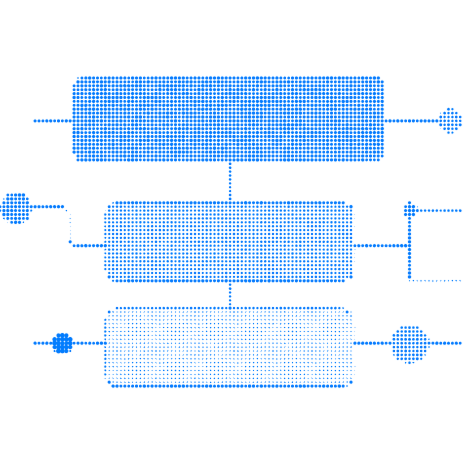
Before Interaction illustration
During Interaction illustration
After Interaction illustration

Traditional collections rely on sampled QA after the fact.
This model prevents violations before they occur.

01
Before
Interaction
  • Policy encoding with Risk/Compliance sign-off
  • Strategy boundaries and settlement caps enforced
  • Version baseline locked before release

Compliance is structural, not dependent on retraining.

02
During
Interaction
  • Deterministic guardrails block prohibited language
  • Real-time escalation for sensitive scenarios
  • Full interaction capture

No off-script moments.

03
After
Interaction
  • Audit-ready replay by account, cohort, and rule
  • Version and change logs for every release
  • Continuous drift monitoring

Examiner-ready evidence, not reconstructed explanations.

Economic Impact

Post-Charge-Off

  • Higher liquidation → improved LGD
  • Fewer agencies → lower audit overhead
  • Stable recovery curves → stronger capital planning confidence

Pre-Charge-Off

  • Improved cure rates without staffing growth
  • Reduced roll rates into charge-off
  • Lower cost-to-collect volatility

Finance & Risk Evaluation Lens

  • Recovery gains that hold outside of test environments
  • Less variance across segments, cycles, and vintages
  • Economics you can underwrite and plan against

Deployment
Without Ambiguity

Path A:
Third-Party Post-Charge-Off

A

  • Launch inside existing vendor framework
  • Predefined benchmark cohorts
  • Explicit scale gates
  • Typical initial timeline: ~30 days

Path B:
First-Party Pre-Charge-Off

B

  • Cross-functional governance alignment
  • In-environment implementation
  • Controlled expansion by segment
  • Typical timeline: 2–3 months

Built for the Real Buying Committee

Collections needs performance.
Compliance needs structural control.
Risk needs model visibility.
Executives need defensibility.

  • Champion–challenger documentation
  • Compliance architecture artifacts
  • Version governance logs
  • Interaction audit samples
  • Deployment roadmap

So the decision is defendable in committee — not just persuasive in demos.

Built for
Every Stakeholder

Frequently Asked
Questions

What does Kompato actually do?

Kompato operates as an AI-powered collections operator, not just a software layer. Our AI Agents execute outreach, negotiation, and follow-through across voice, SMS, email, and digital channels. The system manages the full lifecycle of borrower engagement while tracking commitments and optimizing recovery. It can function as a third-party agency or embed into first-party operations.

Most tools automate a single channel (e.g., voice bots) or sit on top of existing workflows. Kompato replaces the execution layer entirely with an AI-native operating system that coordinates channels, memory, compliance, and decisioning together. It doesn’t just assist agents—it performs the work end-to-end. The differentiation is in orchestration, not just automation.

Yes, the system is built with multiple layers of data protection and access control. PII is scrubbed or restricted before reaching language models, and all actions are governed by strict policy engines. Sensitive operations like payments are handled through secure, compliant channels (e.g., DTMF for PCI). Data exposure is minimized by design.

It enforces consistent, policy-compliant behavior across every interaction, eliminating human variability. Tone, disclosures, and treatment are controlled centrally and validated before delivery. The system also adapts to borrower signals (e.g., hardship), reducing the likelihood of inappropriate pressure. This results in more predictable and defensible customer experiences.

It’s designed for lenders, creditors, and financial institutions managing delinquent or at-risk portfolios. It works across both first-party and third-party collections environments. Teams that want to improve recovery while reducing operational complexity benefit most. It’s especially valuable where scale, compliance, and consistency are critical.

Yes, integration can be lightweight or deeply embedded depending on preference. At minimum, it works with standard file exchanges (e.g., SFTP), using the same data flows as traditional agencies. For more advanced use cases, API integrations enable real-time connectivity. It does not require replacing core systems.

A basic deployment can be live in roughly ~4 weeks using file-based integration. More complex API-driven setups may take 8-12 weeks. Because it operates as an execution layer, it avoids large transformation projects. Clients can start with a pilot and scale based on results.

It replaces repetitive execution, not strategic oversight. Kompato’s human experts, in collaboration with your team, still define policies, constraints, and escalation paths. The system handles day-to-day interactions autonomously while routing edge cases or high-value decisions to humans.

It generates granular, interaction-level data across all channels and borrower behaviors. This includes engagement patterns, treatment effectiveness, promise adherence, and channel performance. Because every interaction is structured and tracked, it enables deeper analysis than traditional operations. These insights can inform both collections strategy and upstream risk decisions.

Evaluate Performance Without Increasing Risk

Bring your Collections, Compliance, and Risk stakeholders to one working session and align on:

  •  Portfolio fit
  • Governance architecture
  • Pilot design and scale gates
  • Economic impact under conservative assumptions